Details
Jack Daniel's
WINERY SUMMARY

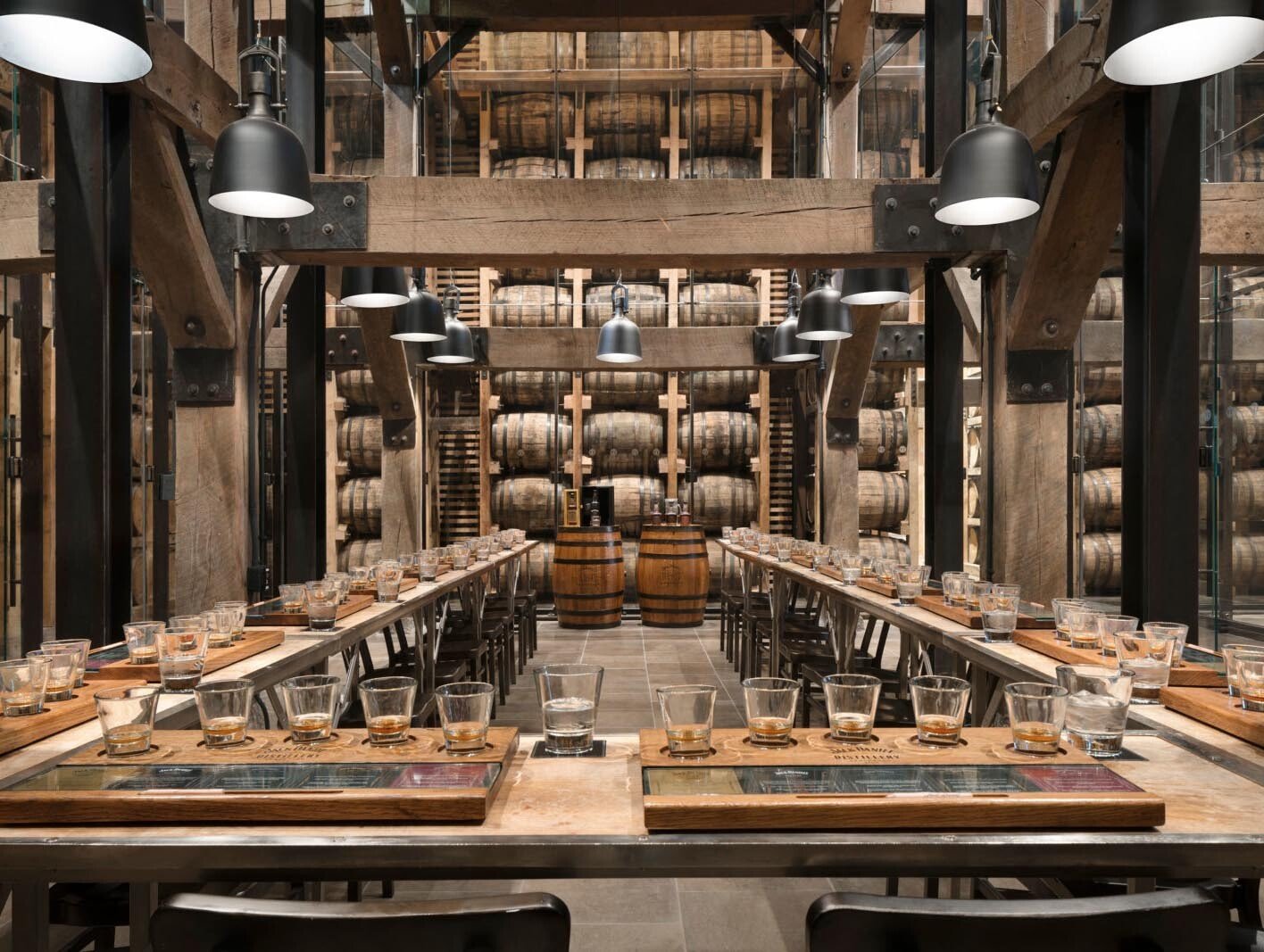
Jack Daniel's in Lynchburg, Tennessee opens like a chapter of American industry and flavor; step into the distillery and you feel the pull of Cave Spring Hollow’s iron-free, limestone-filtered water and the echo of 19th-century cooperage. As a Tennessee distillery founded in 1866 by Jasper Newton “Jack” Daniel, Jack Daniel's anchors its profile in the Lincoln County Process—charcoal mellowing before barrel aging—which is responsible for the soft, approachable texture that defines Old No. 7. In Lynchburg, Moore County’s long history as a dry county since 1909 adds an intriguing civic twist: the distillery operates under a rare exemption, offering on-site bottle sales and tastings that feel like an invitation to both history and hospitality. The arrival sequence is sensory: the faint smoke from charred staves, the scent of yeast and warm grain from the mash, and the mineral coolness that whispers of the spring beneath the property. That immediacy—water, wood, fire, time—is the first lesson in what makes Jack Daniel’s Tennessee whiskey singular. The distillery’s heritage and craft are inseparable. Jack Daniel learned distilling techniques from Dan Call and from Nathan “Nearest” Green, a formerly enslaved man now widely recognized as the first Master Distiller in the operation’s origin story; their combined influence established production practices that the distillery still honors. The company’s square bottle, introduced in 1895, became a design hallmark tied to transparency and integrity, and the brand earned a Gold Medal at the 1904 St. Louis World’s Fair—an early credential that helped propel international recognition. Ownership transferred through family hands to Lem Motlow and, since 1956, Jack Daniel's has been part of the Brown–Forman portfolio, which has preserved historic processes while enabling limited-edition experiments and premium allocations. Today the distillery credits its production team for daily stewardship of the recipe: local grains centered on a corn base with rye and malted barley accents, sour-mash fermentation for consistency, distillation and then charcoal mellowing that smooths the spirit prior to aging in new, charred American oak. Those steps—grain selection, fermentation rhythm, the charcoal filtration known as the Lincoln County Process, and patient barrel aging—define the distillery’s production philosophy: consistency married to occasional innovation. The product journey at Jack Daniel's moves from mash bill to bottle with signature expressions that span everyday and allocated bottlings. Old No. 7 is the archetype: bottled at 80 proof, it carries toasted oak, caramel, vanilla and a rounded sweetness that reflects corn-forward mash and charcoal mellowing. Gentleman Jack undertakes a secondary charcoal mellowing step after initial maturation, resulting in softer tannins and polished vanilla-fruit notes. Single Barrel Select and Single Barrel Barrel Proof are drawn from selected rickhouses; these expressions amplify wood spice, concentrated caramel, and structural tannins—proofs vary but the impact is direct and intense. Tennessee Rye introduces a spicier grain character with herbal and pepper notes layered over the distillery’s trademark smoothness. Limited-edition offerings—Sinatra Select and occasional barrel-proof releases—showcase unique finishing decisions and direct allocations to collectors, while flavored expressions such as Tennessee Honey and Tennessee Fire expand the brand’s reach in cocktails and approachable pours. Across the portfolio, aging in new charred American oak imparts char, vanilla and tannin, while the Lincoln County Process and Cave Spring water knit those elements into a cohesive spirit. Visitors who sample across a guided flight can trace how proof, barrel position in rickhouses and finish type alter aroma, palate and length. The visitor experience is intentionally tactile and informative. Jack Daniel's offers guided tours that navigate the still house, charcoal mellowing vats, rickhouses and the space above Cave Spring Hollow; tours typically include curated tastings and access to the visitor center’s historical exhibits. The site’s architecture mixes 19th-century industrial fabric with curated interpretive spaces—exposed brick, ironwork, cooperage tools and the distillery’s iconic signage—so every corridor feels like a museum of craft. The tasting room and gift shop allow direct purchases, including limited releases available on-site, while private or group experiences can sometimes be arranged through the distillery’s booking channels. Because Lynchburg’s exemption is uncommon, on-site purchases and tastings are framed as a special opportunity to buy expressions not always available at retail. For planning, visit Lynchburg in spring and fall for mild weather and fuller tour schedules; summer sees higher visitor volume. Bookings for guided tours and allocated tastings are recommended—some special experiences and limited releases require advance reservation and allocations can sell out. The distillery’s production team manages daily operations; while the historical name of Nathan “Nearest” Green appears throughout interpretation, current master distiller details are handled by the distillery’s staff and official channels. Jack Daniel's offers both a deep history lesson and a sensory map of Tennessee whiskey: from limestone water to charcoal, from 1866 to today. Reserve a guided tour at Jack Daniel's in Lynchburg to taste the lineage of Old No. 7, explore single-barrel complexity and experience a distillery that shaped American spirits.